
India’s GeoFinance Strategy: Building Economic Resilience
As geopolitical tensions rise globally, India is increasingly focusing on economic resilience alongside economic growth. Prime Minister Narendra Modi’s appeal to reduce unnecessary fuel use, gold purchases, and foreign spending reflects a broader GeoFinance strategy aimed at protecting the Indian economy from external shocks.
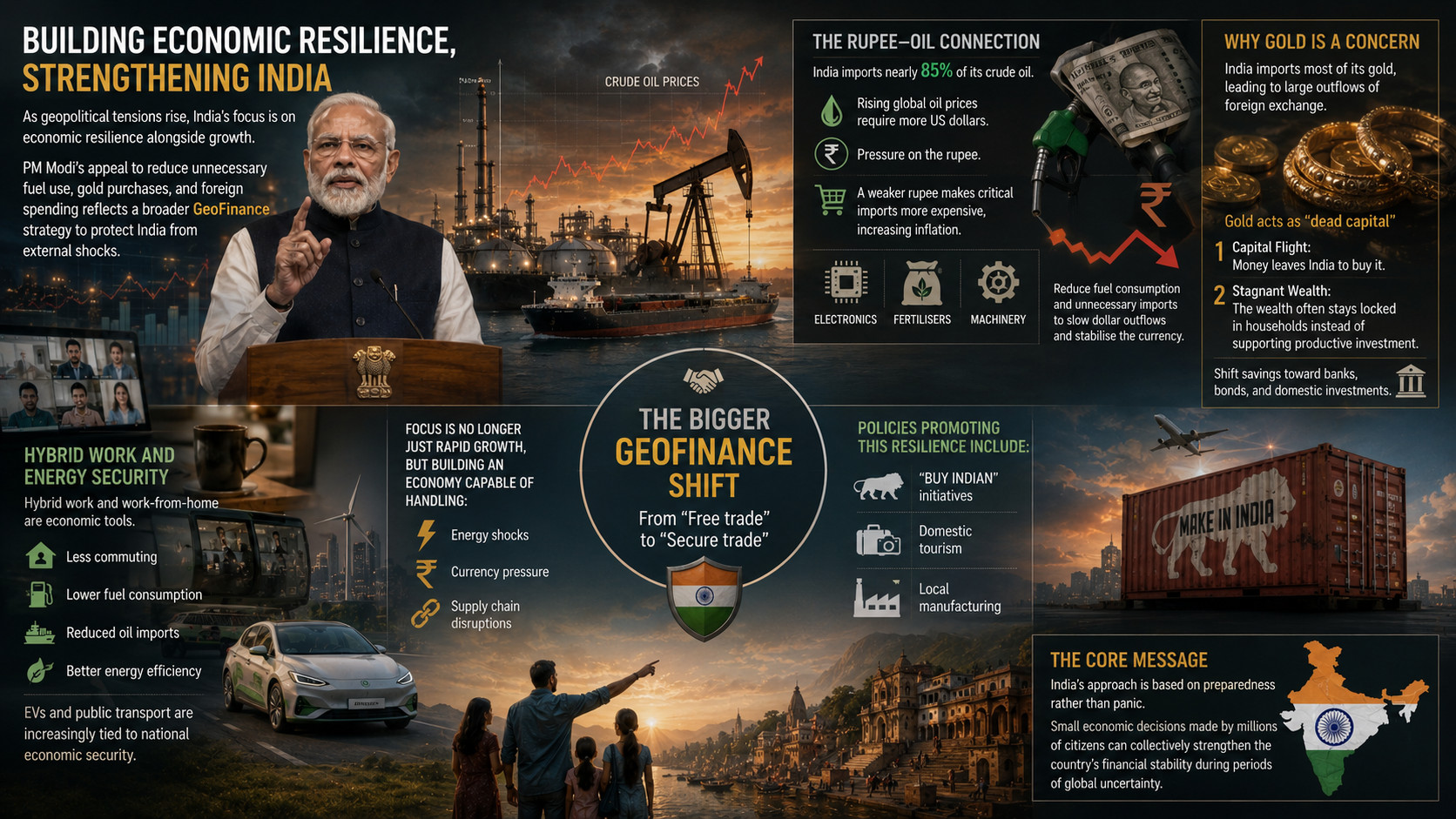
As geopolitical tensions rise globally, India is increasingly focusing on economic resilience alongside economic growth. Prime Minister Narendra Modi’s appeal to reduce unnecessary fuel use, gold purchases, and foreign spending reflects a broader GeoFinance strategy aimed at protecting the Indian economy from external shocks.
The Rupee–Oil Connection
India imports nearly 85% of its crude oil. When global oil prices rise, India needs more US dollars for imports, putting pressure on the rupee.
A weaker rupee makes critical imports more expensive, increasing inflation across the economy:
- Electronics
- Fertilisers
- Machinery
Reducing fuel consumption and unnecessary imports helps slow dollar outflows and stabilise the currency.
Why Gold Is a Concern
India imports most of its gold, meaning large amounts of foreign exchange leave the country every year. From the government’s perspective, gold acts as “dead capital”:
- Capital Flight: Money leaves India to buy it.
- Stagnant Wealth: The wealth often stays locked in households instead of supporting productive investment.
This is why policymakers encourage shifting savings toward banks, bonds, and domestic investments.
Hybrid Work and Energy Security
Hybrid work and work-from-home are now being viewed not just as convenience measures, but also as economic tools. Less commuting leads to:
- Lower fuel consumption
- Reduced oil imports
- Better energy efficiency
Similarly, EVs and public transport are increasingly tied to national economic security.
The Bigger GeoFinance Shift
India’s strategy reflects a global transition from “Free trade” to “Secure trade”. The focus is no longer just rapid growth, but building an economy capable of handling:
- Energy shocks
- Currency pressure
- Supply chain disruptions
Policies promoting this resilience include:
- “Buy Indian” initiatives
- Domestic tourism
- Local manufacturing
The Core Message
India’s approach is based on preparedness rather than panic. The idea is simple: small economic decisions made by millions of citizens can collectively strengthen the country’s financial stability during periods of global uncertainty.