
Taiwan and the Semiconductor War: Why One Island Controls the World
An analysis of Taiwan's critical role in the global economy through its dominance in advanced semiconductor manufacturing (TSMC), and the massive technological, economic, and geopolitical risks tied to a potential conflict in the Taiwan Strait.
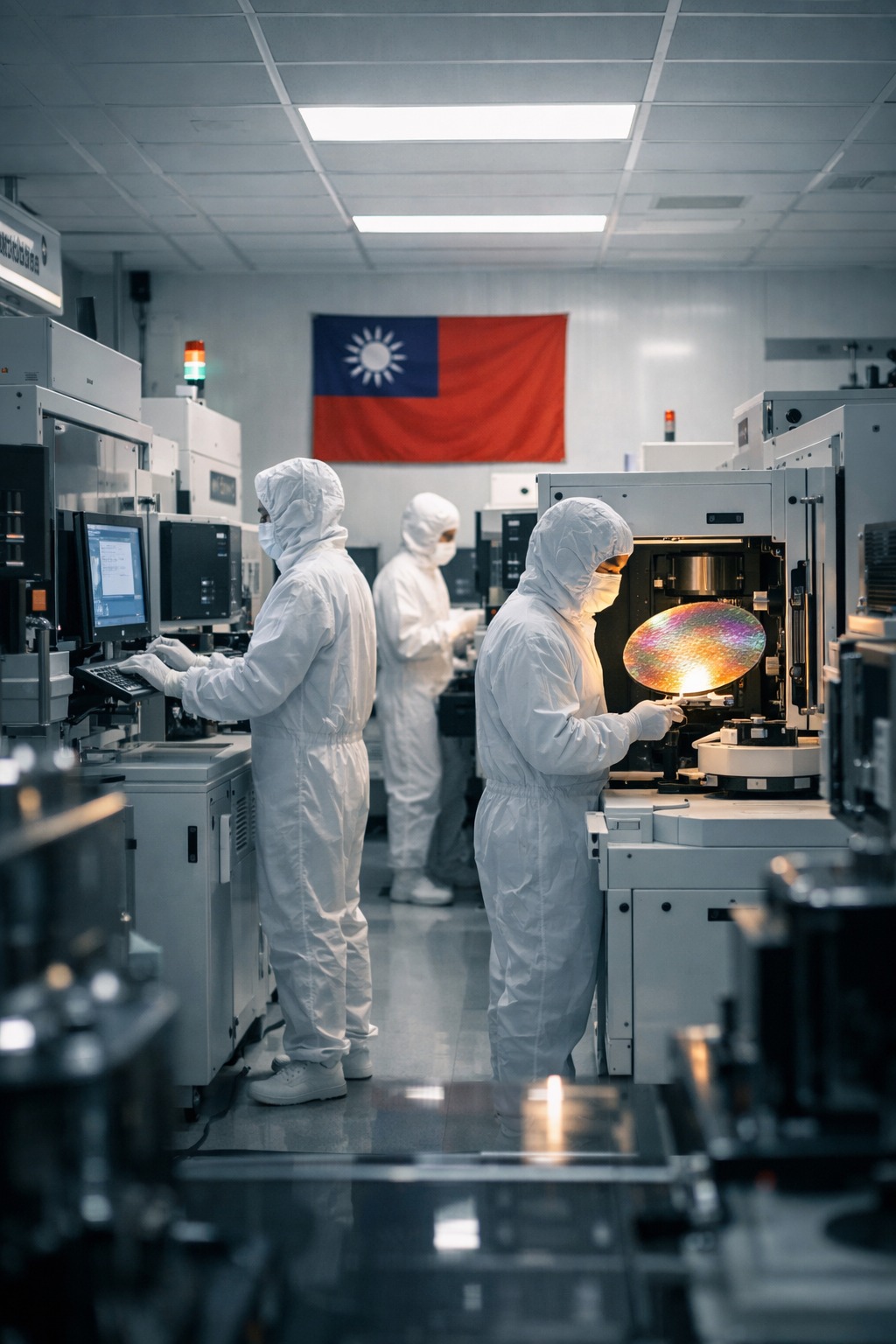
The Silicon Shield: Taiwan’s Strategic Dominance in the Global Economy
Taiwan is a self-governing island of roughly 23 million people, located just ~180 kilometres off the coast of mainland China. In traditional geopolitical terms — land size, population, military strength — it would be considered a mid-tier player. But in today’s technology-driven world, Taiwan holds a level of strategic importance that far exceeds its physical scale.
That importance comes down to one company: Taiwan Semiconductor Manufacturing Company (TSMC). And more specifically, to one critical output — advanced semiconductors, the foundational components behind modern computing, artificial intelligence, and military systems.
How Taiwan Became the Global Chip Hub
Taiwan’s dominance was not accidental; it was the result of long-term industrial planning starting in 1987. The government backed the creation of TSMC using a unique "foundry model"—manufacturing chips designed by others.
- The Foundry Model: Companies like Apple, Nvidia, Qualcomm, and AMD could innovate rapidly without investing billions in fabrication facilities (fabs).
- Capital Intensity: A single advanced fab can cost between $15–25 billion.
- Expertise Gap: Beyond money, the barrier is decades of engineering precision.
- Market Share: By 2025, TSMC was producing around ~90% of the world’s most advanced chips (3-nanometre and below).
A System the World Depends On
The importance of this dominance extends far beyond consumer electronics, underpinning both global economics and national defense.
Strategic Dependencies
- Defense: Advanced fighter jets, missile defense platforms, and surveillance systems rely on TSMC-manufactured chips.
- AI & Computing: Nvidia’s AI processors, which power global data centers, are produced exclusively by TSMC.
- Consumer Tech: The global smartphone and PC markets are tied directly to Taiwanese production schedules.
Key Takeaway: A disruption at a single company would ripple across the entire global technology ecosystem, stalling military hardware production and advanced computing.
The Geopolitical Fault Line
The risk becomes more complex when combined with China’s long-standing position on Taiwan. Since 1949, China has maintained that Taiwan is part of its territory.
This creates a unique concentration of risk:
- Amphibious Threats: The People’s Liberation Army (PLA) has developed significant naval and missile capabilities.
- Economic Shock: Estimates suggest a conflict could reduce global economic output by up to ~$2.5-5 trillion in the first year.
The US Response — And Its Constraints
Recognizing this vulnerability, the United States passed the CHIPS and Science Act (2022), allocating $52 billion to support domestic manufacturing.
| Action | Impact |
|---|---|
| TSMC Arizona | New facilities committed, but represent a fraction of total capacity. |
| Intel/Samsung Expansion | Significant domestic growth, but years away from full scale. |
| Talent & Ecosystem | Taiwan's institutional expertise cannot be replicated quickly. |
A Structural Risk That Remains
Despite ongoing efforts, the global economy remains heavily dependent on a single geographic location for its most advanced chips. This creates a fragile equilibrium involving a concentrated supply chain and a contested geopolitical environment with no immediate alternative at scale.
Any disruption in the Taiwan Strait would not just be a political or military event — it would trigger a global technological and economic shock simultaneously.
What Comes Next
The real question is not just whether conflict occurs, but how markets react if it does.
Part 2 examines the immediate financial response — how equities, currencies, semiconductor stocks, and global markets could react within the first 72 hours of a Taiwan Strait crisis.