
The Panama Canal's Water Challenge: Why Global Trade Depends on Rainfall
For more than a century, the Panama Canal has served as one of the most vital arteries of the global economy. By connecting the Atlantic and Pacific Oceans, the canal eliminates the need for ships to travel around South America's southern tip—slashing shipping times by weeks and lowering transportation costs.
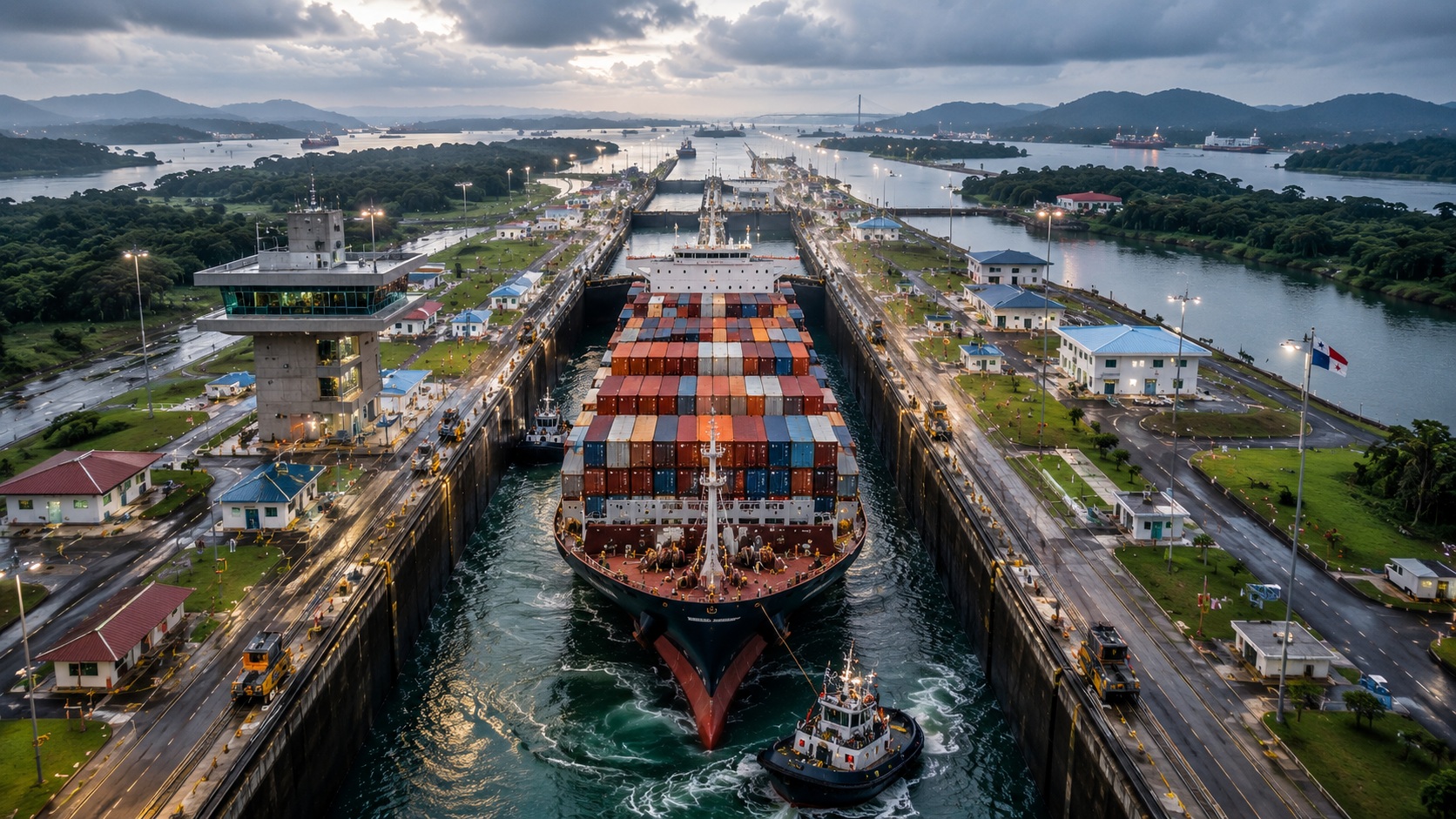
The Panama Canal's Water Challenge: Why Global Trade Depends on Rainfall
For more than a century, the Panama Canal has served as one of the most vital arteries of the global economy. By connecting the Atlantic and Pacific Oceans, the canal eliminates the need for ships to travel around South America's southern tip—slashing shipping times by weeks and lowering transportation costs.
At first glance, the canal is a triumph of engineering. Increasingly, however, it is a climate story. Recent droughts have highlighted an operational reality: one of the world's most critical transit routes depends entirely on freshwater availability.
Why Fresh Water is the Canal's Core Input
Unlike sea-level waterways like the Suez Canal, the Panama Canal operates as an elevated freshwater bridge sitting 85 feet above sea level. It uses a complex, lock-based system to lift and lower ships across continental terrain.
[Ocean Level] ▼ [Upward Locks] ─► (Lifts ship 85 feet) ▼ [Gatun Lake Reservoir] ─► (⚠️ Consumes 52 Million Gallons of freshwater per transit) ▼ [Downward Locks] ─► (Lowers ship back down) ▼ [Ocean Level]
Every single vessel that transits the canal consumes roughly 52 million gallons of freshwater, drawn directly from the man-made Gatun Lake. This water is not recycled; it is discharged directly out into the ocean during lock operations.
When regional droughts occur or weather cycles delay the rainy season, lake levels fall. This forces the Panama Canal Authority (ACP) to ration water by lowering maximum draft allowances (forcing ships to carry less cargo) or capping the number of daily transits.
Climate Friction Meets Supply Chains
When the Panama Canal faces water scarcity, the throughput capacity of global logistics contracts. These disruptions quickly create cascading effects throughout the macroeconomy:
- Escalating Transit Costs: To bypass long queues, shipping lines compete in open auctions for unreserved transit slots, occasionally bidding over $1 million for immediate passage.
- Alternative Route Costs: Rerouting mega-freighters around Africa or utilizing alternative rail networks adds substantial fuel burn, carbon footprints, and up to 14 days of delivery delays.
- Energy Vulnerability: With ongoing instability in the Red Sea, U.S. energy producers rely heavily on the Panama Canal to move liquefied natural gas (LNG) and crude oil to Asian markets. A water crisis here instantly creates a localized supply squeeze.
Infrastructure in an Era of Structural Risk
Historically, the primary threats to maritime commerce were viewed through a human lens: regional conflicts, blockades, legal sanctions, and trade wars. The evolving status of the Panama Canal proves that environmental variables now carry equivalent structural weight.
As localized weather cycles shift from predictable seasonal anomalies into permanent structural trends, infrastructure resilience is transforming into a core asset class for multinational corporations and global institutional investors.
GeoFinance Impact Matrix
- Trade Route Interdependency: ↑ High Strategic Exposure
- Logistical Overhead Multipliers: ↑ Volatile Cost Premiums
- Alternative Corridor Demand: ↑ Increased Fleet Tonnage Demand
- Infrastructure Operational Risk: ↑ Environmental Dependency
The Bottom Line: For over a century, the Panama Canal successfully conquered physical geography to unite global economies. Moving forward, its greatest challenge will not be managing the physical size of global vessels, but securing the rainfall required to keep them moving.