
The Roads of the AI Economy: Why Amazon Is Investing in Fiber
When people think about artificial intelligence, they usually picture advanced algorithms, powerful chips, and cutting-edge software. Few think about fiber-optic cables. Yet as AI adoption accelerates, companies are discovering that intelligence alone is not enough. Behind every AI model lies a vast physical network responsible for moving enormous volumes of data across the world.
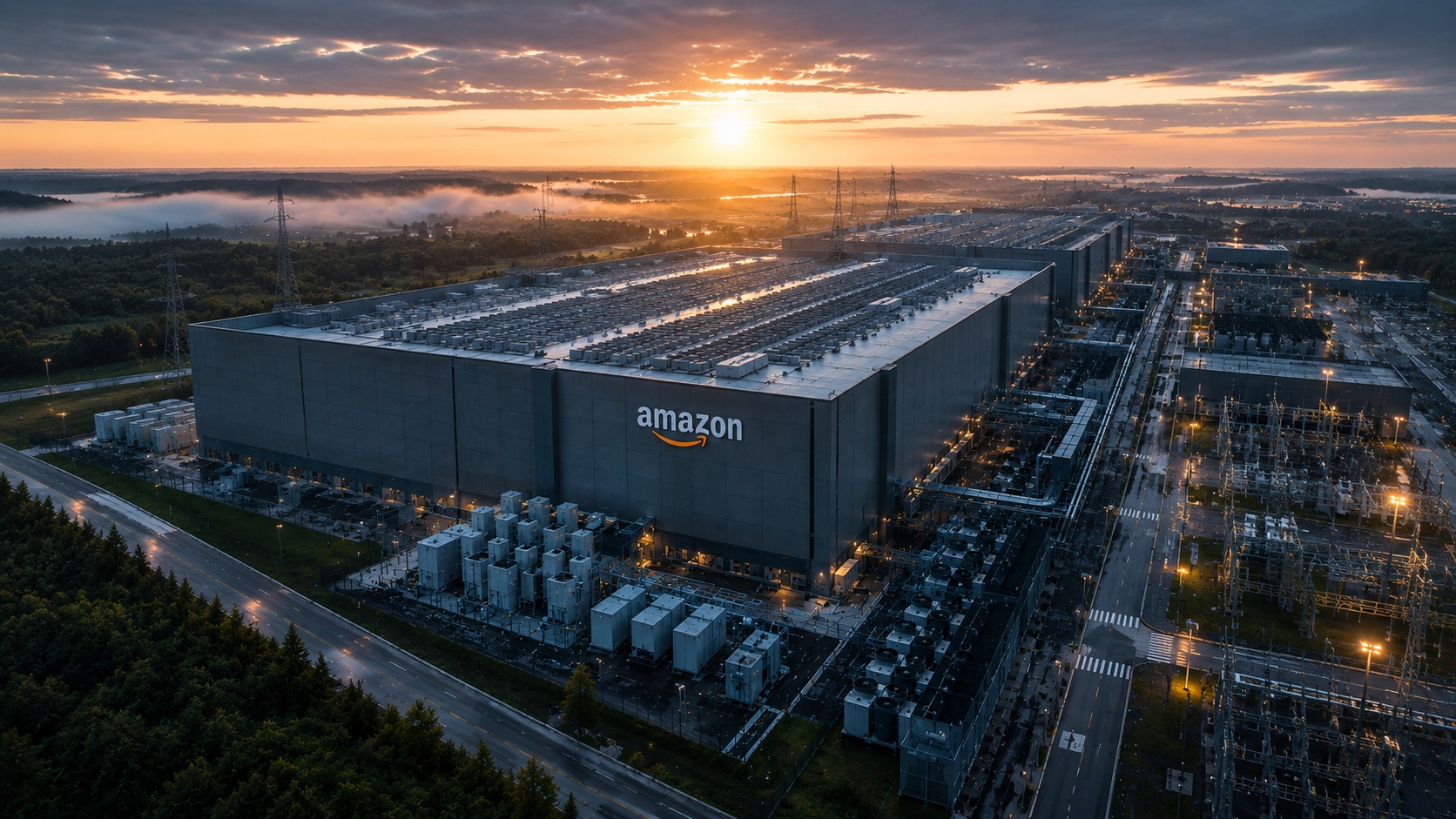
The Connectivity Pipeline: Why the AI Revolution Rides on Fiber-Optic Networks
When people think about artificial intelligence, they usually picture advanced algorithms, powerful chips, and cutting-edge software. Few think about fiber-optic cables. Yet as AI adoption accelerates, companies are discovering that intelligence alone is not enough. Behind every AI model lies a vast physical network responsible for moving enormous volumes of data across the world.
Amazon's recent heavy investments in fiber infrastructure highlight a reality that often goes unnoticed: the future of AI depends just as much on connectivity as it does on computing power.
The Hidden Layer of Artificial Intelligence
AI systems process enormous amounts of information every second. Every interaction, cloud request, and data transfer must travel through a complex network of servers, data centers, and communication infrastructure. While semiconductors receive much of the attention, these systems cannot operate efficiently without the networks connecting them.
- High-Speed Arteries: Fiber-optic cables act as the highways of the digital economy, allowing information to move between facilities at extremely high speeds.
- Capacity Strains: As AI workloads continue to expand, the demand for high-bandwidth networks is growing exactly in parallel with the demand for raw computing power.
From Railways to Fiber Networks
Throughout history, periods of major economic transformation have relied on new forms of infrastructure:
- Industrial economies depended heavily on railways.
- Global trade expanded through deep-water ports and shipping routes.
- The internet era was built on telecommunications networks.
The AI era is creating a similar requirement. The crucial difference is that the foundational infrastructure supporting modern growth is increasingly digital rather than physical. Instead of transporting raw materials or physical goods, these contemporary networks transport information.
Why Infrastructure Is Becoming a Competitive Advantage
The global race for AI leadership is often framed purely as a software competition between technology companies. In reality, it is a race for physical footprint and infrastructure. Countries and corporations are investing heavily across four key fronts:
- Data Centers: Scalable, climate-controlled environments for intense server clustering.
- Fiber-Optic Networks: Ultra-low latency pipelines to keep computing clusters synchronized.
- Electricity Generation: Reliable baseload power to run high-density computing non-stop.
- Semiconductor Ecosystems: Secure supply chains for high-performance silicon.
The ability to scale AI increasingly depends on access to these foundational systems. As a result, infrastructure is becoming a critical strategic asset rather than a background utility.
The Bigger Economic Shift
The significance of Amazon's infrastructure push extends far beyond basic telecommunications. It reflects a broader trend in which digital infrastructure is becoming as important to economic growth as traditional infrastructure once was.
Just as highways enabled industrial expansion and ports enabled global trade, data networks are enabling the next phase of technological development. The companies and countries that build these systems may gain structural advantages that extend far beyond the technology sector itself.
The GeoFinance Perspective
The AI revolution is often presented as a software story. Increasingly, it is becoming an infrastructure story. The technologies shaping the future economy depend on an extensive network of cables, power systems, data centers, and semiconductor facilities operating behind the scenes.
Understanding those structural dependencies may be just as important as understanding the technologies themselves.