The Strait of Hormuz: World's Most Dangerous Chokepoint
Most people recognize the name of the Strait of Hormuz, but far fewer grasp how physically constrained it is — or how critical it is to the global energy system. At its tightest stretch, the distance between Iran and Oman’s Musandam peninsula is just about 33 kilometres, comparable to a short intercity drive. Yet this narrow corridor handles a disproportionate share of the world’s energy trade. Since February 28, 2026, that corridor has effectively been shut to commercial shipping for the first time in modern history — turning a geographic bottleneck into a global economic shock point.
The Strategic Bottleneck: Why the Strait of Hormuz Governs the Global Economy
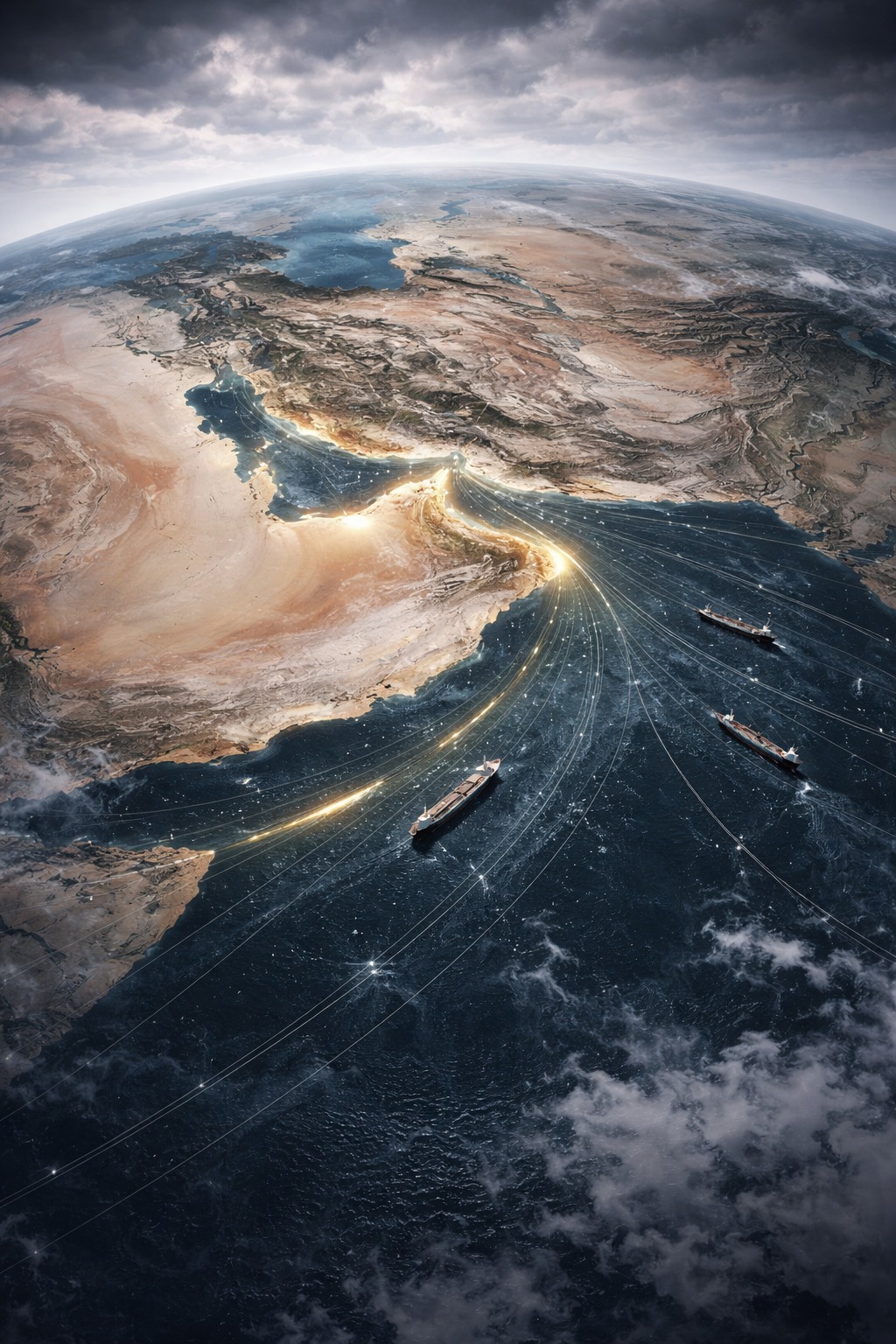
Most people recognize the name of the Strait of Hormuz, but far fewer grasp how physically constrained it is — or how critical it is to the global energy system. At its tightest stretch, the distance between Iran and Oman’s Musandam peninsula is just about 33 kilometres, comparable to a short intercity drive. Yet this narrow corridor handles a disproportionate share of the world’s energy trade.
Since February 28, 2026, that corridor has effectively been shut to commercial shipping for the first time in modern history — turning a geographic bottleneck into a global economic shock point.
The Geography of Energy
The strait functions as the only maritime gateway connecting the Persian Gulf — home to the largest cluster of proven oil and gas reserves — to the open waters of the Indian Ocean. What makes it even more fragile is that the usable shipping space is far narrower than the total width suggests.
Vessel movement is organized into:
- Two inbound and two outbound lanes, each roughly 3 kilometres wide.
- Lanes are separated by a 3-kilometre buffer zone.
- At any given time, multiple large oil tankers — each carrying 1 to 2 million barrels — move through this tightly controlled channel.
Despite its limited size, the volume it handles is enormous:
- 20–21 million barrels of oil per day: Approximately 20% of global supply.
- LNG Trade: Nearly 18% of global supply, largely from Qatar.
Key Takeaway: No other single chokepoint in the world carries this level of energy concentration.
The Scale of Dependency
The countries most vulnerable to any disruption here are primarily in Asia, where dependency on this single corridor is a matter of national security.
| Country | Dependency on Hormuz Route |
|---|---|
| Japan | ~80% of oil imports (minimal domestic production) |
| South Korea | ~70% dependency for crude supplies |
| India | ~55% of crude imports rely on this passage |
| China | ~40% of oil imports routed through the Strait |
The Cost of Rerouting: Alternatives exist in theory, but not at scale. Diverting shipments around the Cape of Good Hope adds roughly 15 extra days to transit time and over $1 million in additional cost per voyage.
A History of Threats — and One Reality
The Strait of Hormuz has long been a geopolitical pressure point, but actual closure has always been avoided — until now.
- 1980s Tanker War: Both sides targeted shipping; oil prices surged ~40%.
- 2011 Nuclear Tensions: Threats caused oil to jump $5 per barrel in a single session without a physical shutdown.
- 2019 Tanker Attacks: Market prices spiked ~15% before diplomatic de-escalation.
February 28, 2026, marked the first time the threat translated into execution.
The Economic Cost of Closure
The implications of a sustained shutdown extend far beyond energy markets. Economic modelling suggests that a 30-day closure could result in a global GDP impact of roughly $1.5 to $2 trillion, driven by:
- Elevated energy costs and rising inflation.
- Tighter monetary conditions (central bank interest rate hikes).
- Reduced consumer and business spending due to uncertainty.
In response, the IEA initiated a release of ~400 million barrels from strategic reserves. However, this only offsets approximately ~25–26 days of lost supply at current disruption levels.
The Only Real Solution
Ultimately, logistical adjustments and reserve releases can only provide temporary relief. The reopening of the strait depends on one factor alone: political resolution. Until that occurs, the global economy remains exposed to one of the most critical vulnerabilities in the modern energy system — a narrow stretch of water just 33 kilometres wide, with outsized influence over world financial stability.